

A critical reading of A Private War from the perspective of a Yemeni journalist in conflict zones
A Private War Is Not Only About Marie Colvin, but About the War Ignited Inside Every Journalist
When I paused at the film’s title, A Private War—and more precisely at the indefinite article “A”—I immediately realized that this small letter carries the weight of the entire story. This is not war in its collective, military sense. It is one particular kind of war: an intimate, individual, and devastating battle that unfolds inside a journalist’s skull, in parallel with the shells falling outside.
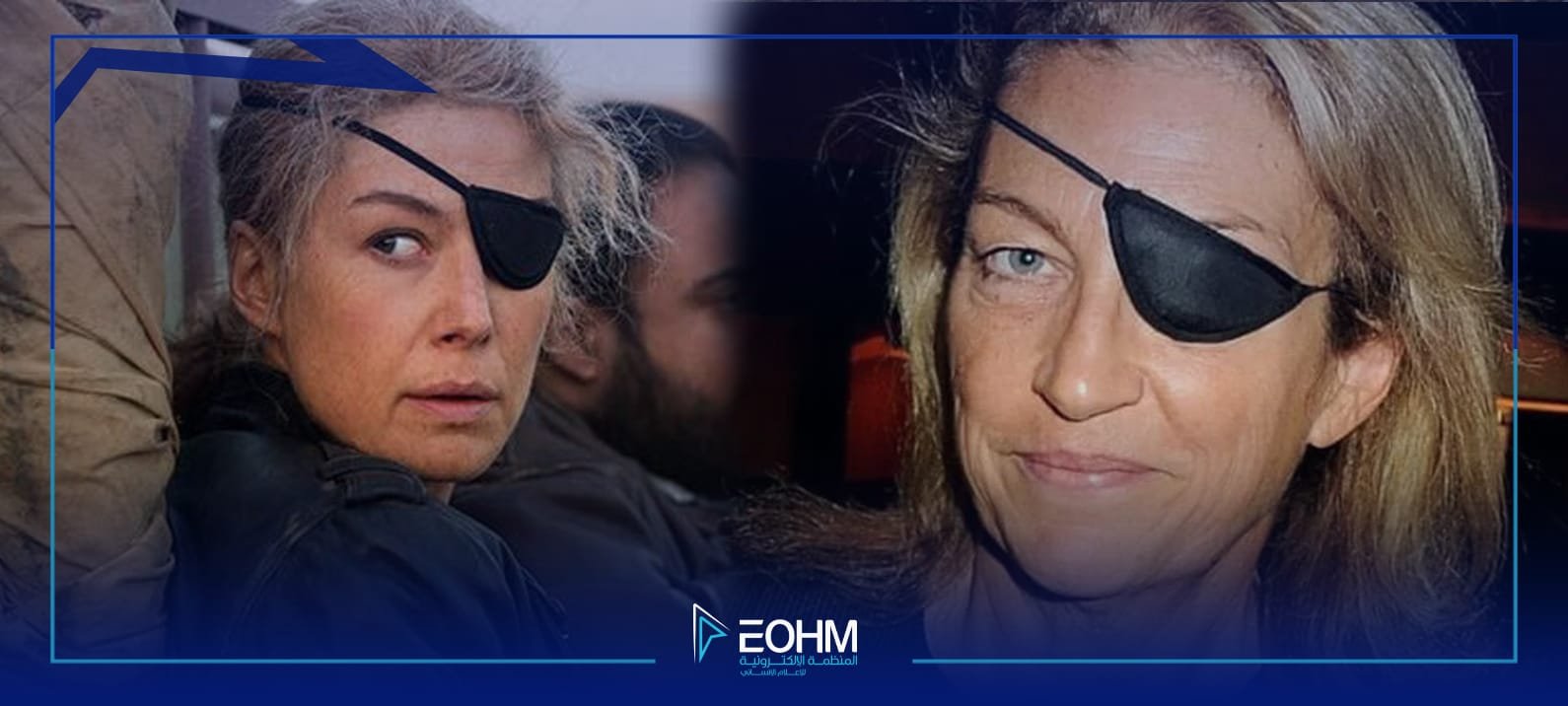
Marie Colvin as a Mirror: When Reality Becomes Personal
As a filmmaker who has worked alongside many field journalists documenting human suffering in Yemen during the war, I find in Marie Colvin’s story a terrifying mirror of our own reality. This film is not merely a biographical account; it is a psychological dissection of an entire generation of journalists and filmmakers who found themselves—just as Marie says in the film—
“We write, tragically, something like our own obituary, while we are still alive.”
Between Courage and Addiction to Danger
The film skillfully plunges into that gray zone between courage and addiction to risk. We did not go to the frontlines only to convey the truth, but because—tragically—we had become unfit for the “normal” life lived by others, the life every young person dreams of. In one of the film’s most incisive exchanges, Sean shouts at Marie:
“I asked you to stop a long time ago. But you’re like a moth drawn to the flame.”
But is it really just an addiction to adrenaline?
Moral Injury: The Invisible Wound
Recent studies on war journalism reveal that what often drives correspondents to repeatedly throw themselves into danger is what is known as moral injury. This wound strikes the conscience when a journalist witnesses atrocities and crimes they cannot prevent, or when they are consumed by guilt for surviving while those they were documenting did not. This feeling explains Marie’s self-destructive behavior: excessive drinking, fleeting and hollow relationships, and the relentless urge to return to danger. Yet Marie rejects the diagnosis, saying:
“Post-traumatic stress disorder is what soldiers get.”
The truth, however, is that the psychological pressure endured by journalists and filmmakers is no less brutal. We begin to seek our own deaths as an unconscious way of writing our obituaries—an act of atonement for a moral guilt toward those we left behind. When Marie screams at the doctor in Homs,
“I want people to know your story!”
she is desperately trying to give meaning to their deaths—and to her own possible death.
Emotional Emptiness as a Narrative Necessity
Within the context of this internal war, the film presents heavy drinking, smoking, and failed emotional experiments as an essential narrative device. These moments visually embody the immense emotional void felt by people like Marie—and like us. We sacrifice domestic happiness for the sake of the story. When Marie says bitterly,
“I want to be a mother, and I have to accept the fact that I may never be one,”
and when she admits that she fears aging, yet also fears dying young, she encapsulates the tragedy of our private lives. Our relentless pursuit of human stories has robbed us of the ability to live an ordinary life.
The Local Journalist: A Deeper Tragedy
The film succeeds in dissecting the suffering of the Western correspondent, but our reality as local journalists is even bleaker. Marie Colvin—despite all her pain—had the privilege of returning to London, to her doctor, to a life that could still be described as “normal.” As one journalist once said bitterly:
“They have places where they can grieve like human beings.”
We, local journalists in conflict zones, face higher rates of PTSD, harsh living conditions, incomes that barely meet the most basic needs, and an almost total absence of mental and physical health services. Quite simply:
War is our homeland.
In Yemen, and across the Middle East from the beginning of the Arab Spring to this day, the journalist has become part of the torn social fabric—trapped, with no escape from a reality that grows more miserable by the day, while covering the stories of neighbors and relatives, and sometimes their own story.
When a Safe Life Becomes Alien
These pressures make even a fleeting intimate moment or family happiness a distant dream. Our emotional withdrawal is not a choice, but an inevitable outcome of an unending struggle. We find ourselves in danger not because we chose it, but because there is nowhere else to go. The film ends with Marie realizing that she may not return, yet insisting on going live to tell the world:
“It is a complete and utter lie.”
A scene that reaches the pinnacle of both tragedy and triumph. We have become like Marie, seeking our fate in dangerous places—not out of love for death, but because a safe life no longer resembles us. War has stolen our ability to live a private peace. A Private War is not merely a film about war in Syria, Sri Lanka, or Libya. It is a film about our own private war—the war that erupts when we fail to sustain an intimate relationship, when we look into the mirror and see only the ghosts of those we filmed and told their stories. As Marie says at both the beginning and the end of the film, with utmost clarity:
“I think fear comes at the very end, when everything is over.”
And we, in the midst of our endless coverage, never allow that “everything” to end—so that we do not have to face that fear.